13 Feb
A stable is not just a shelter.
It is a living environment, one that directly affects animal health, respiratory safety, hoof condition, infection control, and overall performance. In the UAE, where temperatures are high and enclosed environments are common, stable hygiene becomes even more critical.
Stable cleaning is not basic sweeping and bedding replacement. It is structured sanitation designed to control bacteria, ammonia levels, moisture buildup, parasites, and organic waste accumulation.
Professional stable cleaning services focus on protecting both animals and handlers through systematic, safe, and environmentally responsible cleaning practices.
In equestrian facilities, private stables, racing environments, and livestock shelters, hygiene is operational, not optional.
Why Stable Cleaning Requires Professional Attention in the UAE
Dubai’s climate presents unique challenges.
High temperatures accelerate bacterial growth. Moisture from washing areas evaporates quickly but leaves residue behind. Bedding absorbs urine rapidly, creating ammonia concentration in enclosed stalls. Sand and dust from outdoor paddocks settle indoors continuously.
If cleaning is inconsistent or superficial, the environment becomes a risk zone.
Elevated ammonia levels irritate respiratory systems in horses and livestock. Damp bedding promotes fungal growth. Poorly cleaned flooring increases the likelihood of hoof infections and slip-related injuries.
Routine daily maintenance is important, but it does not replace structured deep sanitation.
Professional stable cleaning addresses the hidden layers, not just visible waste.
The Risks of Inadequate Stable Hygiene
When stable cleaning is reduced to surface sweeping, the impact builds slowly.
Ammonia accumulation from urine-soaked bedding irritates lungs and eyes. Over time, this contributes to respiratory sensitivity and performance decline in animals.
Bacterial contamination on walls, feeding troughs, and stall partitions increases the risk of infections. Moisture trapped beneath mats creates breeding grounds for pathogens.
In larger facilities, shared wash areas and walkways require consistent disinfection to prevent cross-contamination.
Beyond animal health, there is also operational risk. Slippery surfaces, clogged drainage systems, and waste buildup create hazards for handlers and staff.
A structured stable cleaning service addresses these risks systematically.
What Professional Stable Cleaning Involves
A professional approach goes beyond removing waste. It follows a hygiene cycle that restores and protects the stable environment.
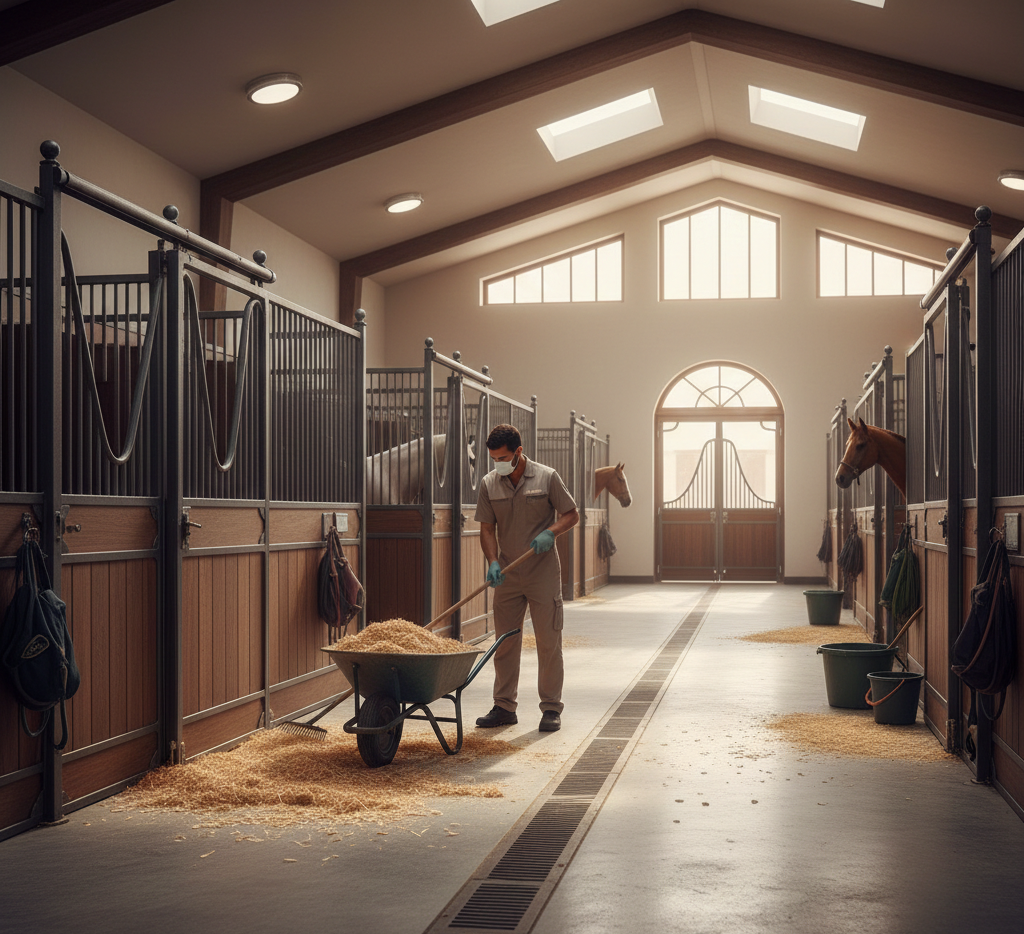
Stalls are fully cleared of bedding and organic waste before sanitation begins. Flooring is pressure-cleaned where appropriate, removing embedded residue from textured surfaces and rubber mats.
Drainage channels are flushed and cleared to prevent moisture retention and odor buildup. Feeders and water containers are disinfected using animal-safe solutions to eliminate bacterial contamination without introducing harmful chemicals.
Walls and partitions are treated to remove dust, stains, and microbial buildup. Ventilation points are cleaned to ensure airflow remains unobstructed, critical in Dubai’s enclosed stable designs.
Once surfaces are dry, fresh bedding is introduced in controlled layers to maintain absorbency and airflow beneath the animal.
The result is not just a cleaner stall, but a stabilized environment.
Ammonia Control and Air Quality
One of the most overlooked aspects of stable maintenance is air quality.
Ammonia forms when urine breaks down. In poorly ventilated stables, it lingers at ground level, precisely where animals breathe while resting.
Even when odor is not strongly noticeable, concentration may still be high enough to irritate airways.
Professional stable cleaning reduces ammonia levels by:
- Removing saturated bedding completely
- Treating flooring beneath mats
- Ensuring proper drying before re-bedding
- Supporting ventilation pathways
In Dubai’s climate, where stables are often climate-controlled, maintaining air quality is essential for animal comfort and respiratory safety.
Infection Prevention and Biosecurity
In multi-animal facilities, hygiene plays a direct role in disease control.
Shared tools, grooming areas, and wash stations can become contamination points if not cleaned properly. A structured stable cleaning service includes disinfecting high-contact areas using approved animal-safe cleaning agents.
Biosecurity measures often include:
- Separate cleaning zones
- Equipment sanitation protocols
- Floor disinfection cycles
- Controlled waste disposal
Preventive sanitation reduces the likelihood of bacterial spread between stalls.
In equestrian training facilities especially, consistent hygiene supports animal performance and minimizes downtime due to illness.
Flooring, Hoof Health, and Drainage Systems
Stable flooring must remain dry and stable.
When moisture accumulates beneath bedding or rubber mats, it softens hoof structures and increases susceptibility to infections such as thrush.
Professional stable cleaning services inspect and treat flooring surfaces during sanitation cycles. Pressure washing, drying time management, and proper bedding layering help maintain dryness while supporting comfort.
Drainage systems are equally critical. Clogged drains lead to standing water, which promotes bacteria and attracts insects.
In the UAE, where temperature fluctuations can intensify odor and microbial growth, drainage maintenance is not a minor detail.
It is structural hygiene management.
Stable Cleaning for Private and Commercial Facilities
Private stable owners may manage small-scale cleaning themselves, but professional intervention becomes important periodically, particularly after seasonal changes, illness outbreaks, or facility upgrades.
In commercial stables, riding schools, racing facilities, and equestrian centers, cleaning must follow a structured schedule.
High foot traffic, frequent washing, and multiple animals increase the speed of contamination buildup. Professional cleaning ensures consistency and compliance with safety standards.
A reliable stable cleaning service supports facility managers in maintaining controlled hygiene environments that meet operational expectations.
Safe Cleaning Practices for Animals
Chemical selection matters.
Harsh disinfectants can irritate sensitive respiratory systems and contaminate bedding if residues are not managed properly.
Professional stable cleaning teams use animal-safe, non-toxic cleaning solutions appropriate for enclosed livestock environments. Cleaning methods are selected based on surface type, animal presence, and ventilation capacity.
Drying time is carefully observed before animals are reintroduced into cleaned stalls.
This is not about aggressive sanitation.
It is about controlled hygiene.
Frequency of Professional Stable Cleaning
Daily maintenance should include waste removal and bedding replacement. However, deep sanitation should be scheduled periodically based on:
- Number of animals
- Ventilation quality
- Climate exposure
- Training or competition schedules
- Health incidents
In Dubai, quarterly professional deep stable cleaning is common in well-managed facilities. High-performance stables may require more frequent structured cleaning cycles.
Preventive sanitation reduces emergency situations.
The Long-Term Benefits of Professional Stable Hygiene
When stable hygiene is consistent and professionally managed, the benefits become measurable.
Animals experience fewer respiratory irritations. Hoof conditions improve. Odor levels remain controlled. Surfaces retain structural integrity longer.
Staff operate in safer, cleaner conditions. Facility reputation improves. Maintenance costs reduce over time because structural damage from neglect is prevented.
A stable is a controlled ecosystem. Cleaning is part of its management.
Conclusion
Stable cleaning is not cosmetic maintenance.
It directly affects animal health, respiratory safety, infection control, and facility standards. In Dubai’s climate, environmental factors accelerate contamination buildup, making structured sanitation even more essential.
Professional stable cleaning ensures that stalls, flooring, drainage systems, and ventilation areas are restored systematically, not just cleared visually.
If your stable environment needs structured sanitation beyond routine maintenance, Lustra Cleaning provides professional stable cleaning services designed for safe, controlled, and reliable hygiene management.
Contact Lustra Cleaning today to maintain a healthier, safer environment for your animals and your facility.