13 Feb
Marble has always been associated with elegance.
From luxury villas to hotel lobbies and corporate offices, marble flooring and surfaces elevate a space instantly. But over time, even the finest marble begins to lose its clarity. Foot traffic dulls its shine. Cleaning chemicals etch its surface. Furniture movement leaves faint scratches. Hard water creates subtle staining.
What once reflected light beautifully begins to look tired and flat.
Marble polishing is not about adding shine on top. It is about restoring the stone itself.
And in Dubai, where marble is widely used in both residential and commercial interiors, proper polishing is essential for maintaining long-term appearance and value.
Why Marble Loses Its Shine
Marble is a natural stone composed primarily of calcium carbonate. While strong and durable, it is also porous and relatively soft compared to other flooring materials.
Daily use gradually wears down its surface.
Foot traffic creates micro-abrasions. Dust particles act like sandpaper under shoes. Spills, especially acidic substances react chemically with marble, causing dull spots known as etching. Incorrect cleaning products can strip away surface clarity.
Over time, the once smooth surface becomes uneven at a microscopic level, reducing its ability to reflect light.
The result is not just less shine, it is a loss of depth.
Professional marble polishing corrects this at the stone level.
Polishing vs. Cleaning: Understanding the Difference
Many property owners assume that deep cleaning will restore marble floors.
Cleaning removes dirt.
Polishing restores surface smoothness.
When marble appears dull, the issue is rarely surface dirt. It is surface wear.
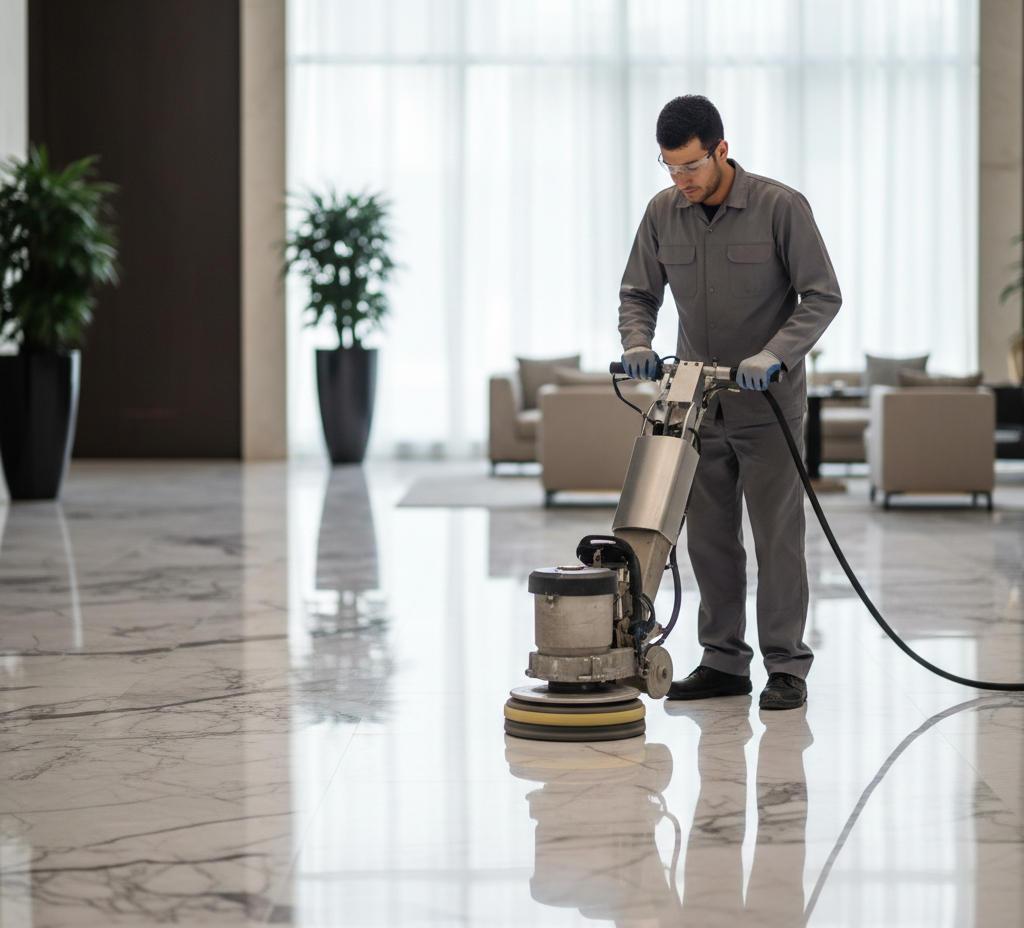
Polishing involves mechanically refining the stone using progressively finer abrasives. This process smooths the surface again, removing scratches, etching marks, and minor stains.
Unlike wax or temporary coatings, professional marble polishing does not cover imperfections. It removes them.
The difference becomes visible immediately in how light interacts with the floor.
The Role of Grinding and Honing Before Polishing
In cases where marble is heavily scratched or uneven, polishing alone is not enough.
Grinding may be required to level the surface. This removes lippage (uneven tile edges) and deeper damage. Honing follows, refining the texture before the final polishing stage.
Each stage uses specific diamond abrasives designed for natural stone.
Skipping these steps can result in uneven shine or recurring dull patches.
Professional marble polishing in Dubai typically includes surface assessment first, determining whether grinding, honing, or only polishing is necessary.
Every marble surface ages differently depending on usage and maintenance history.
Common Issues That Marble Polishing Resolves
In Dubai properties, several recurring marble concerns appear over time.
High-traffic villa entrances often show dull walking paths. Office corridors develop light scratch patterns. Bathroom marble may show water staining or soap residue buildup.
Polishing can correct:
- Surface scratches
- Etch marks from spills
- Light staining
- Uneven shine
- Loss of reflectivity
- Minor surface wear
However, deep structural cracks or severe staining may require additional restoration techniques beyond standard polishing.
A proper evaluation ensures realistic expectations.
Why Dubai’s Environment Impacts Marble Surfaces
Dubai’s climate presents unique challenges.
Fine sand particles easily enter properties, especially during windy conditions. These particles are abrasive. When walking across marble flooring, they gradually erode the surface.
Air conditioning systems run frequently, which can contribute to dry surface conditions. Hard water in certain areas may leave mineral deposits on bathroom marble surfaces.
All of these factors accelerate dullness if not properly maintained.
This is why marble polishing in Dubai is often required more frequently than in less dusty environments.
Commercial Spaces and First Impressions
In commercial buildings, marble flooring often spans reception areas and lobbies.
These areas receive continuous foot traffic. Over time, dullness becomes visible under lighting, especially in polished office towers and hospitality venues.
Polished marble contributes to brand perception.
A clean but dull floor looks aged. A restored marble surface reflects light evenly, creating a professional and well-maintained impression.
For commercial properties, scheduled polishing is often part of long-term facility management, not just aesthetic improvement.
Residential Marble Care and Longevity
In villas and high-end apartments, marble floors are an investment.
When polished correctly, marble retains its elegance for years. However, improper polishing techniques can damage the stone.
Overuse of aggressive abrasives may thin the surface. Applying topical coatings traps moisture underneath. Incorrect chemical use may leave residue.
Professional marble polishing restores clarity while preserving thickness and structural integrity.
After polishing, sealing is often recommended to reduce porosity and improve resistance to future staining.
This extends the life of the stone significantly.
The Polishing Process Explained
A proper marble polishing process follows a structured sequence.
First, the surface is cleaned to remove debris and contaminants. Next, depending on condition, grinding or honing may be performed.
Then, progressively finer abrasives refine the surface. This stage determines how reflective the final result will be.
Finally, polishing compounds enhance the natural gloss of the stone without artificial coating.
Each stage must be evenly applied across the entire area. Inconsistent pressure or uneven machine handling can create patchy shine.
Experience and technical understanding make the difference between temporary improvement and long-lasting restoration.
How Often Should Marble Be Polished?
There is no universal timeline.
High-traffic commercial floors may require polishing annually or biannually. Residential floors may need it every few years depending on usage.
The signs are usually visible:
- Dull appearance despite cleaning
- Visible scratch patterns
- Uneven reflection
- Surface that feels rough to touch
Regular maintenance cleaning and protective sealing reduce how frequently polishing is required.
Ignoring surface wear allows damage to deepen, eventually requiring more aggressive restoration.
Avoiding Common Mistakes
One of the most common mistakes is attempting DIY polishing using rental machines or inappropriate pads.
Marble requires calibrated equipment and controlled abrasion levels. Over-polishing can damage the stone. Under-polishing leaves results incomplete.
Another mistake is applying wax or acrylic coatings to create artificial shine. These coatings trap dirt and eventually peel unevenly.
Professional marble polishing restores the natural stone finish, not a temporary layer.
This distinction matters for long-term durability.
The Value of Proper Marble Restoration
Beyond appearance, polished marble contributes to:
- Improved light reflection
- Enhanced interior brightness
- Smoother surface texture
- Easier routine cleaning
- Increased property value
In high-end properties, flooring is one of the first elements noticed upon entry.
A restored marble floor elevates the entire space.
It reflects care, maintenance, and attention to detail.
Long-Term Marble Maintenance Tips
After professional polishing, maintaining the finish requires simple habits.
Use pH-neutral cleaning products designed for natural stone. Avoid acidic solutions such as vinegar or harsh detergents. Place entrance mats to reduce sand abrasion. Clean spills promptly.
Periodic professional assessment ensures minor wear does not escalate into deeper surface damage.
Marble is durable, but like any natural material, it performs best when properly maintained.
Conclusion
Marble is not meant to fade quietly.
Its natural depth and shine are part of its character. When that clarity diminishes, professional restoration brings it back, not by masking imperfections, but by refining the stone itself.
Marble polishing in Dubai requires technical understanding, correct equipment, and surface-specific treatment to achieve lasting results.
From luxury villas to commercial towers, restored marble enhances light, improves aesthetics, and protects your investment.
If your marble floors have lost their brilliance, Lustra Cleaning provides professional marble polishing services designed to restore natural depth, clarity, and smoothness, without compromising the integrity of the stone.
Contact Lustra Cleaning today to bring your marble surfaces back to life.